

“EARLY SCREENING IS KEY TO EARLY DETECTION OF CERVICAL CANCER” – MAJ DR ALHASSAN
Early screening is key to early detection of cervical cancer, was the central message delivered by Major Dr Fuseini Sylvester Alhassan during a cervical cancer sensitisation lecture organised for personnel at the Air Force Headquarters on Thursday, 29 January 2026.
The lecture formed part of activities marking Cervical Cancer Awareness Month, which is globally observed every January, and sought to promote early detection and preventive health practices among personnel.
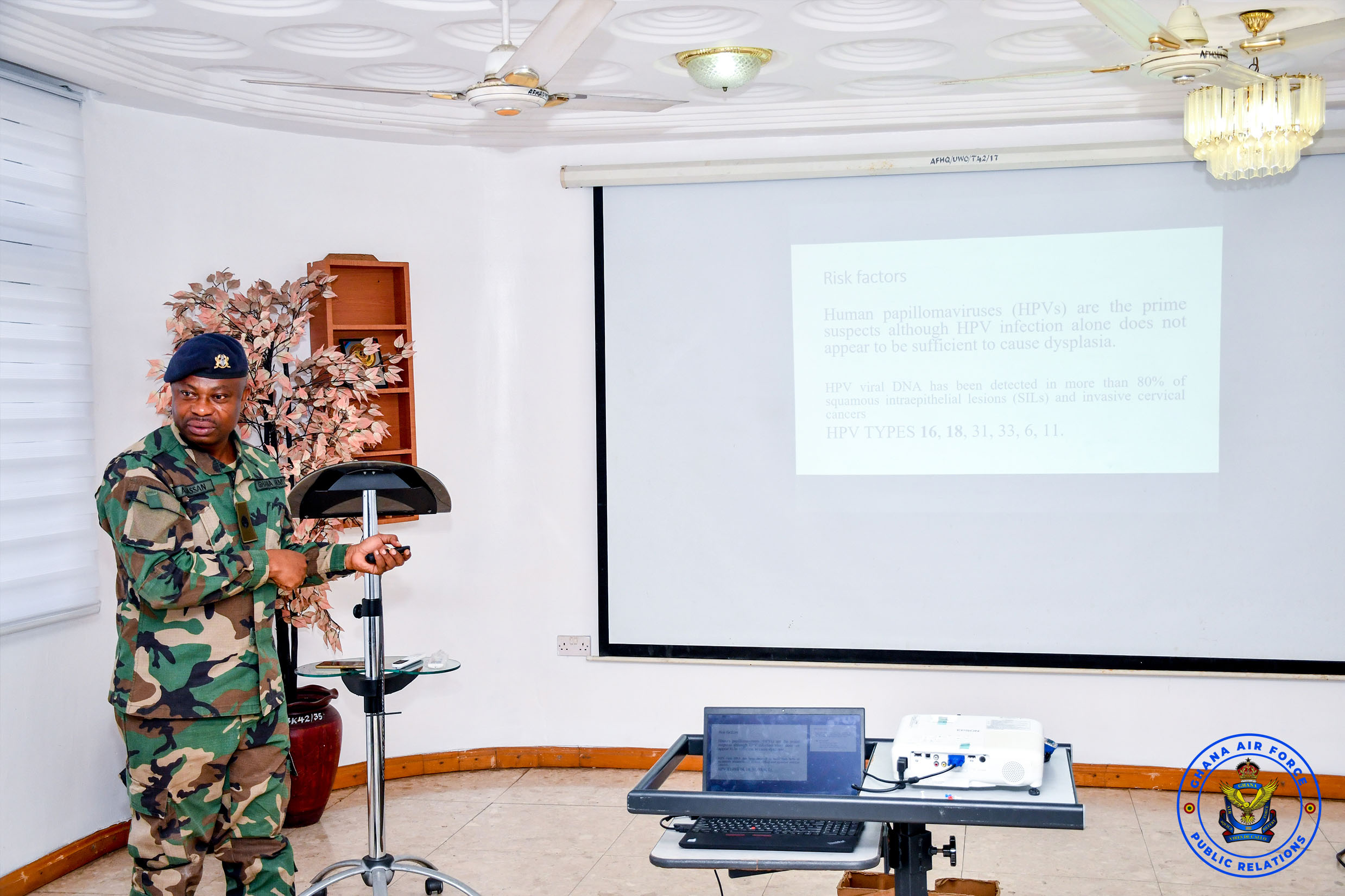
During the lecture, personnel received comprehensive information on its causes, signs and symptoms, risk factors, and preventive measures, with particular emphasis on early detection and personal health responsibility.

Speaking on the topic, Major Dr Alhassan from the Public Health Division of the 37 Military Hospital described cervical cancer as a malignant disease that affects the cells of the cervix, the lower part of the uterus that connects to the vagina. He explained that the condition is strongly associated with infection by high-risk strains of the Human Papillomavirus (HPV).

He further outlined several risk factors, including early coitarche, early marriage, multiple childbirths (high parity), promiscuity, prostitution, smoking, and other unhealthy lifestyle practices, noting that these significantly increase the risk of developing the disease.
Major Dr Alhassan highlighted intermenstrual bleeding, post-coital bleeding, post-menopausal bleeding, and offensive blood-stained vaginal discharge as some of the common signs and symptoms of cervical cancer. He cautioned that many cases may remain asymptomatic in the early stages, making regular screening essential.

To prevent cervical cancer, he recommended key strategies such as vaccination, particularly for girls aged 9 to 14 years and the adoption of safe sexual practices, including avoiding promiscuity and practising safe sex. He strongly advised personnel to prioritise regular screening, explaining that procedures such as Pap smears and other screening methods often detect the disease before symptoms appear.

In concluding the lecture, Major Dr Alhassan reassured personnel that cervical cancer is highly curable when detected early, despite its exact cause remaining unknown, and encouraged all eligible individuals to take proactive steps towards regular screening.

Join Our Mailing List
For receiving our news and updates in your inbox directly.